
What Probate Covers in Graham County
In Graham County, probate and estate administration are handled by the Estates Division of the Clerk of Superior Court. The correct local contact is Clerk of Superior Court Tammy Holloway at the Graham County Courthouse. The courthouse address is listed by the North Carolina Judicial Branch as 12 Court St., Robbinsville, NC 28771, while the county clerk page uses 12 North Main St., Robbinsville, NC 28771. Both refer to the courthouse block in downtown Robbinsville. The mailing address for the clerk is PO Box 1179, Robbinsville, NC 28771, and the phone number is (828) 479-7000.
Probate records may include wills lodged for probate, applications for letters testamentary or letters of administration, orders appointing personal representatives, estate inventories, accountings, creditor notices, claims, receipts, distributions, and final accounts. The same clerk-centered record family can also include guardianship, incompetency, partitions, foreclosures, and other special proceedings affecting property. Estate case information may be available through Portal and public terminals, but the actual case file is viewed through the clerk's office in the county where the estate case is located.
The North Carolina wills and estates help topic is the statewide starting point for estate terminology and process questions.
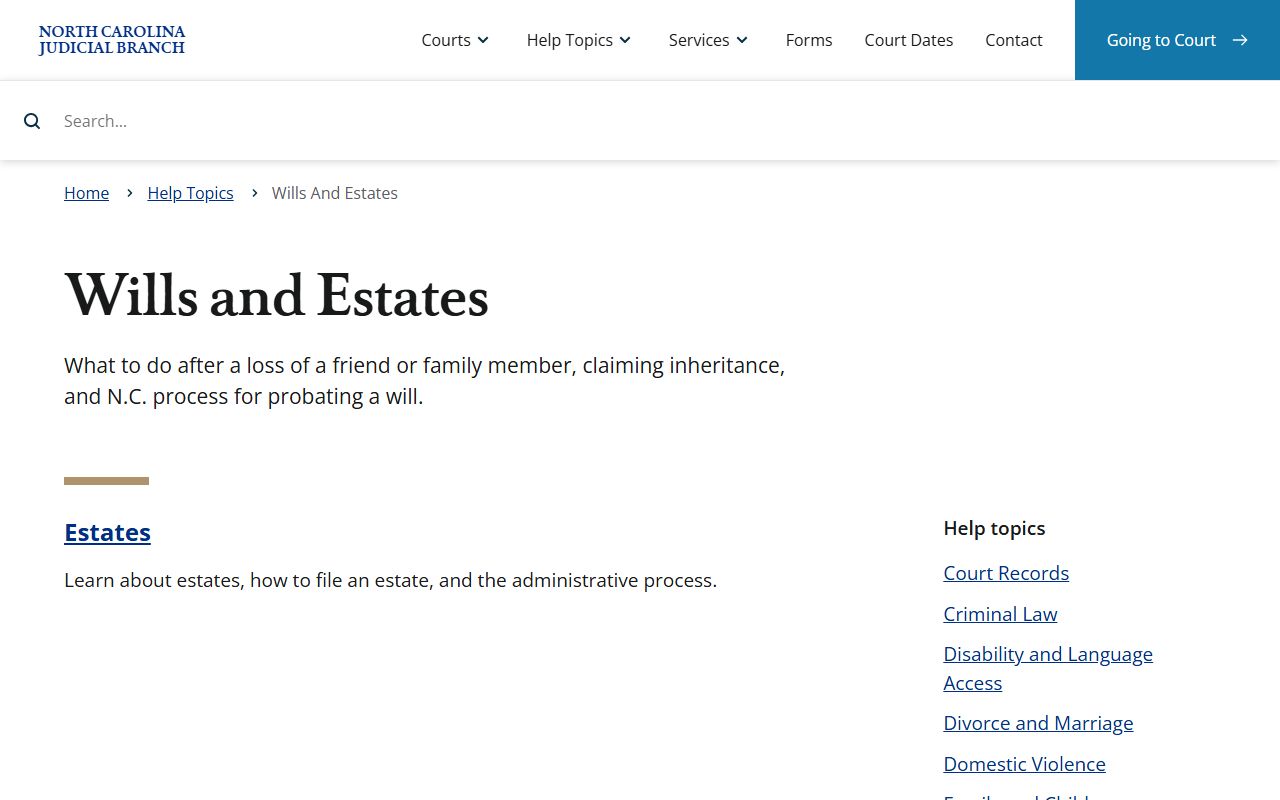
That statewide resource should be paired with the Graham County clerk because local file access, copies, and estate paperwork are handled at the courthouse.
Graham County Clerk of Superior Court
Clerk: Tammy Holloway
12 Court St. / 12 North Main St.
Robbinsville, NC 28771
(828) 479-7000
Fax: (828) 479-7001
Mail: PO Box 1179, Robbinsville, NC 28771
Probate Terms Defined
Estate filings use terms that are easy to confuse with general court vocabulary. These definitions are practical labels for reading Graham County estate and special proceeding records, not legal advice about how to administer an estate.
- Testator
- A person who made a will.
- Executor
- A person named in a will to carry out the will and administer the estate after appointment.
- Administrator
- A person appointed to administer an estate when there is no qualifying executor or no will.
- Intestate
- Dying without a will, which means distribution follows North Carolina intestacy law rather than a written will.
- Letters testamentary
- Clerk-issued authority for a qualifying executor to act for the estate.
- Letters of administration
- Clerk-issued authority for an administrator when the estate is not being handled by an executor under a will.
- Inventory
- A filing that identifies estate assets and values as required in the administration process.
- Accounting
- A report showing estate receipts, payments, distributions, and remaining balances.
- Guardianship
- A proceeding involving appointment and supervision of a person or estate guardian, often containing sensitive information.
- Special proceeding
- A clerk or court matter such as an estate issue, partition, foreclosure, guardianship, or related proceeding.
How to Search Graham County Estates
The North Carolina Judicial Branch obtaining-records guidance says civil, special proceeding, and estates case information can be accessed on public self-service terminals in clerk offices and through Portal online for case information. A terminal or Portal search may help identify a case number, decedent name, file date, case type, status, and docket entries. Full estate files are still viewed through the clerk of court in the county where the case is located.
- Start with the decedent's legal name, approximate date of death, and any known case number or personal representative name.
- Use Portal Smart Search and select Graham County under the location filter when narrowing a statewide result set.
- Search by record number or by name, then use advanced case filters such as case type, status, and file-date range when available.
- If online results are incomplete, use a public terminal at a clerk's office for civil, special proceeding, and estates case information.
- For full file viewing, copy requests, or certified estate documents, contact the Graham County Clerk of Superior Court at (828) 479-7000.
| Search field | Where used | Notes |
|---|---|---|
| Record number or name | Portal Smart Search | Use a case number or decedent / party name. |
| Location | Portal advanced filters | Select Graham County to avoid statewide matches. |
| Case type | Portal advanced filters | Use estates or special proceedings if available. |
| File date start / end | Portal advanced filters | Useful when the year of death or estate opening is known. |
| Public terminal lookup | Clerk office | Available for case information; full file access remains county-specific. |
Estate Process Steps
Estate administration begins with county connection. The first practical question is whether the decedent lived in Graham County or owned property requiring administration there. Because Graham County is a small county and local appointment practices may not be fully published online, contact the clerk before visiting with estate paperwork.
- Determine whether Graham County is the proper county for the estate or property-related proceeding.
- Call the Clerk of Superior Court at (828) 479-7000 to confirm current estate office practices and document needs.
- Bring the death certificate, original will if one exists, asset information, names and addresses of heirs or beneficiaries, and government identification.
- File the required estate application or probate paperwork through the clerk.
- If requirements are met, the clerk issues letters to the personal representative.
- The personal representative gives required notices, collects assets, pays claims, files inventory or accounting documents, and distributes property.
- Final accounting or closing documents are filed with the clerk.
- If disputes arise, the matter may move into special proceedings or court review.
Federal bankruptcy and federal appellate courts are not substitutes for Graham County estate administration, but they can affect a decedent's property or related litigation in unusual cases. The U.S. Bankruptcy Court for the Western District of North Carolina is a separate federal court system.
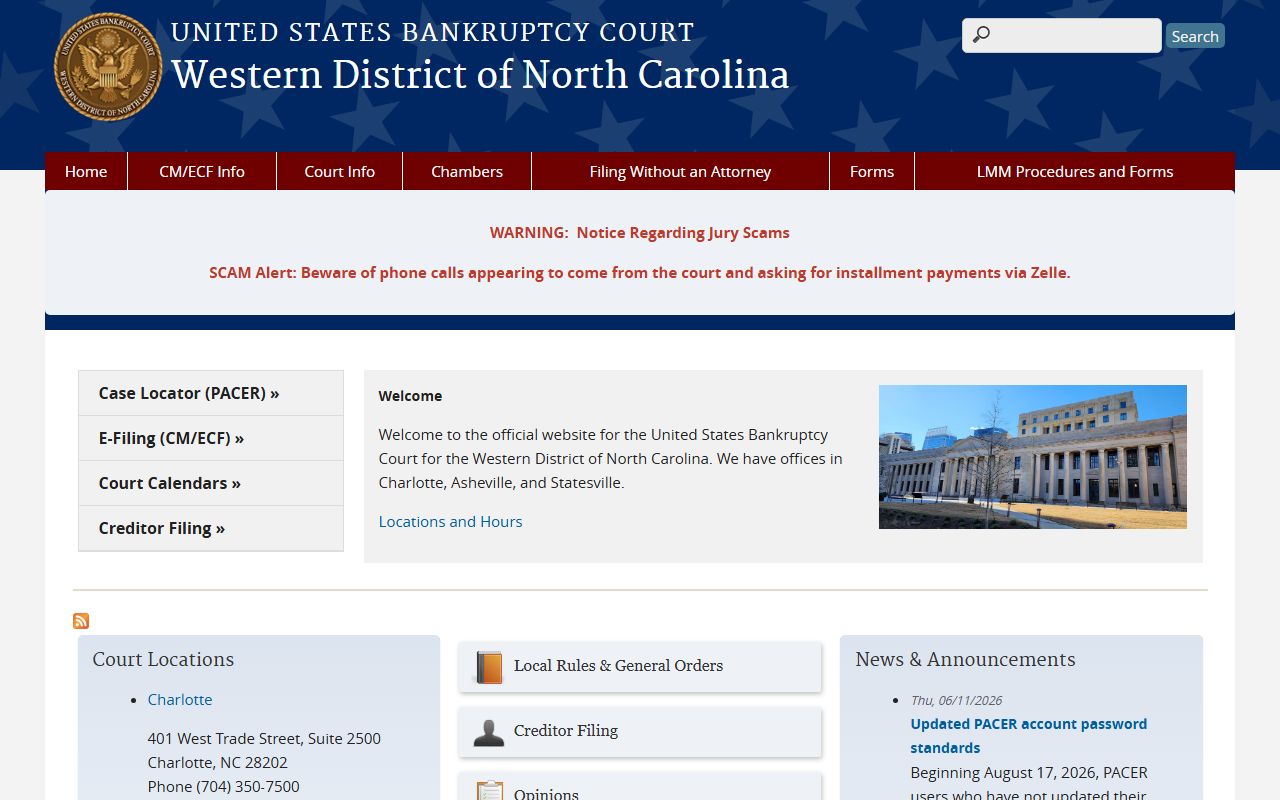
Use federal court resources only when a bankruptcy or federal case is involved; ordinary estate files remain with the Graham County clerk.
Probate Filing Fees
Exact Graham County probate filing amounts were not extracted in the research. The controlling source is the NC Judicial Branch Current Court Costs page, specifically the current estates cost chart. Do not rely on an old fee printed elsewhere unless the clerk confirms it is still current.
| Item | Amount | Source note |
|---|---|---|
| Estate filing or administration cost | See current NC estates court costs | Use the official Current Court Costs chart. |
| Special proceeding cost | See current NC special proceedings costs | Applies when the matter is filed as a special proceeding. |
| Copies from estate file | Fee applies; confirm with clerk | NC Judicial Branch says copies may be provided for a fee. |
| Certified estate document | Confirm with clerk | Amount not located in local Graham County research. |
| Mail payment method | Money order or certified check when accepted by mail | Graham County court payment guidance rejects cash and personal checks by mail. |
What Graham County Probate Records Show
An estate file may show the decedent's name, case number, filing date, personal representative, original will, application paperwork, letters, inventories, accountings, creditor notices, creditor claims, orders, receipts, distributions, and final settlement documents. Guardianship and incompetency records may show petitions, medical or personal allegations, orders, accountings, and guardian reports. Partitions and foreclosures may include property descriptions, parties, notices, bids, orders, and sale-related filings.
Portal results are case-information records, not always the full document file. That means a user may see enough information to confirm that an estate exists, but still need the Graham County clerk to inspect or copy the actual filing. Public terminal access is similar: it helps locate case information, while the county clerk's office controls full file inspection and copy handling for Graham County cases.
Restricted Estate and Guardianship Records
Estate records are generally public unless sealed or restricted, but that does not mean every document is downloadable online. Personal identifiers, financial account information, protected addresses, and similar data may be redacted. Guardianship and incompetency matters can contain sensitive medical and personal material, so access may be limited or handled more cautiously than an ordinary estate file.
Adoption records and mental health matters are restricted categories in North Carolina court records. Juvenile-related information may also be restricted. If a file does not appear in Portal or if a clerk limits access to a document, the reason may be a statute, court order, confidentiality rule, or redaction requirement rather than a missing case. Public-records requests to county government are not the primary channel for estate court files; use the Clerk of Superior Court for estate records.
The U.S. Court of Appeals for the Fourth Circuit appears in the probate page image set as a federal appellate reference, but federal appeals are separate from local estate administration.
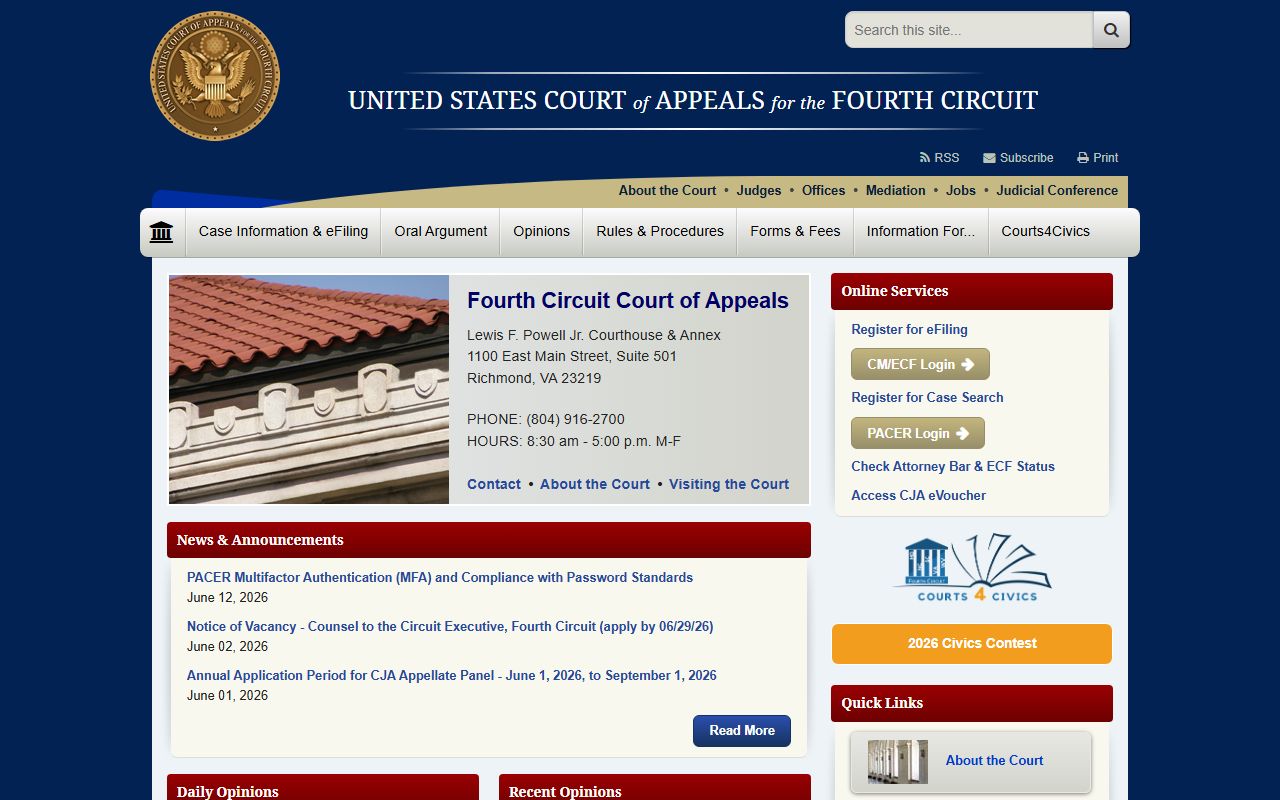
For Graham County probate access, federal appellate material is relevant only when a separate federal appeal exists; routine wills and estates stay with the clerk's estates process.