
Search Graham County Court Records Online
The main online channel for Graham County court records is the North Carolina eCourts Portal. Graham County appears in the statewide Portal after the western North Carolina eCourts expansion, and the Portal links to Smart Search for case records, Search Hearings for court dates, Make Payments for eligible criminal and infraction matters, and the NC Judgment Search index. Portal use requires JavaScript and cookies. Anonymous users may search, but the Portal can require a CAPTCHA, and full document access can depend on the record type and user access level.
Smart Search works best when the case number is known. Name searches must be formatted carefully, and Graham County should be selected as the location when the search is meant to stay local. If the person may have cases in other North Carolina counties, leaving all locations selected can show a wider result set, but it also adds records that are not Graham County cases. A full paper file, certified copy, criminal background check through court records, or older non-digitized file should be handled through the Clerk of Superior Court.
- Open the Portal and choose Smart Search for case records and case information.
- Enter a record number when known, or search by name in last, first middle suffix format.
- Expand Advanced Filtering Options and choose Graham County under location to narrow the result.
- Use party fields, case type, case status, and file-date filters when the first search returns too many cases.
- For court dates, switch to Search Hearings and search by case number, party, attorney, judicial officer, or courtroom.
- Contact the Clerk of Superior Court for copies, certifications, older files, and case-specific questions.
Graham County Court Records Search Fields
Smart Search exposes both a simple record-number or name box and advanced party and case filters. The Portal text notes wildcard rules for names and case numbers, which helps when a name is misspelled or a full first name is not known. The fields below reflect the research capture from the Smart Search interface.
| Field Label | Type | Required | Notes / Format |
|---|---|---|---|
| Enter a Record Number or Name | Text | Required unless advanced fields are used | Use record number or last, first middle suffix format. Name wildcard needs three last-name characters plus an asterisk. |
| Enter a Last Name / First Name | Text | Required in party mode | Use party mode for defendant, plaintiff, petitioner, respondent, or business searches. |
| Filter by Location | Dropdown / multi-select | Optional | Select Graham County to avoid statewide results. |
| Filter by Search Type | Dropdown | Optional | Party Name, Nickname, Business Name, and Sounds Like are shown in Portal text. |
| Date of Birth From / To | Date | Optional | Advanced party filter useful when common names return many results. |
| Case Type / Case Status | Dropdown | Optional | Narrows civil, criminal, estate, domestic, or other case categories when options are available. |
| File Date Start / End | Date | Optional | Limits results by filing date range. |
Types of Graham County Court Records
Graham County court records come from a unified North Carolina court system. Superior Court handles felony criminal cases, civil cases over the District Court threshold, and appeals from District Court for a new trial. District Court handles misdemeanors, infractions, traffic cases, juvenile matters, domestic cases, civil cases under the Superior Court threshold, and magistrate matters such as small claims. The Clerk of Superior Court keeps the county-level files for both courts.
The NC Judicial Branch court records help topic explains that criminal, civil, special proceeding, estate, and divorce judgment records are routed through Portal, public terminals, and the clerk's office. Graham County court records may include:
- Criminal records with charges, warrants or citations, bonds, pleas, judgments, dismissals, probation, and sentencing.
- Civil records such as complaints, answers, motions, orders, judgments, liens, foreclosures, partitions, and condemnations.
- Domestic records such as divorce, custody, child support, alimony, equitable distribution, and protective order cases.
- Estates and special proceedings, including wills, estate administration, guardianship, incompetency, partitions, and foreclosures.
- Traffic and infraction files showing citations, court dates, waivers, dispositions, costs, failures to appear, and license reporting.
- Judgment and lien index entries maintained under clerk record-keeping rules.
The NC Judicial Branch obtaining-records page is the source for the public court file channels used in Graham County.
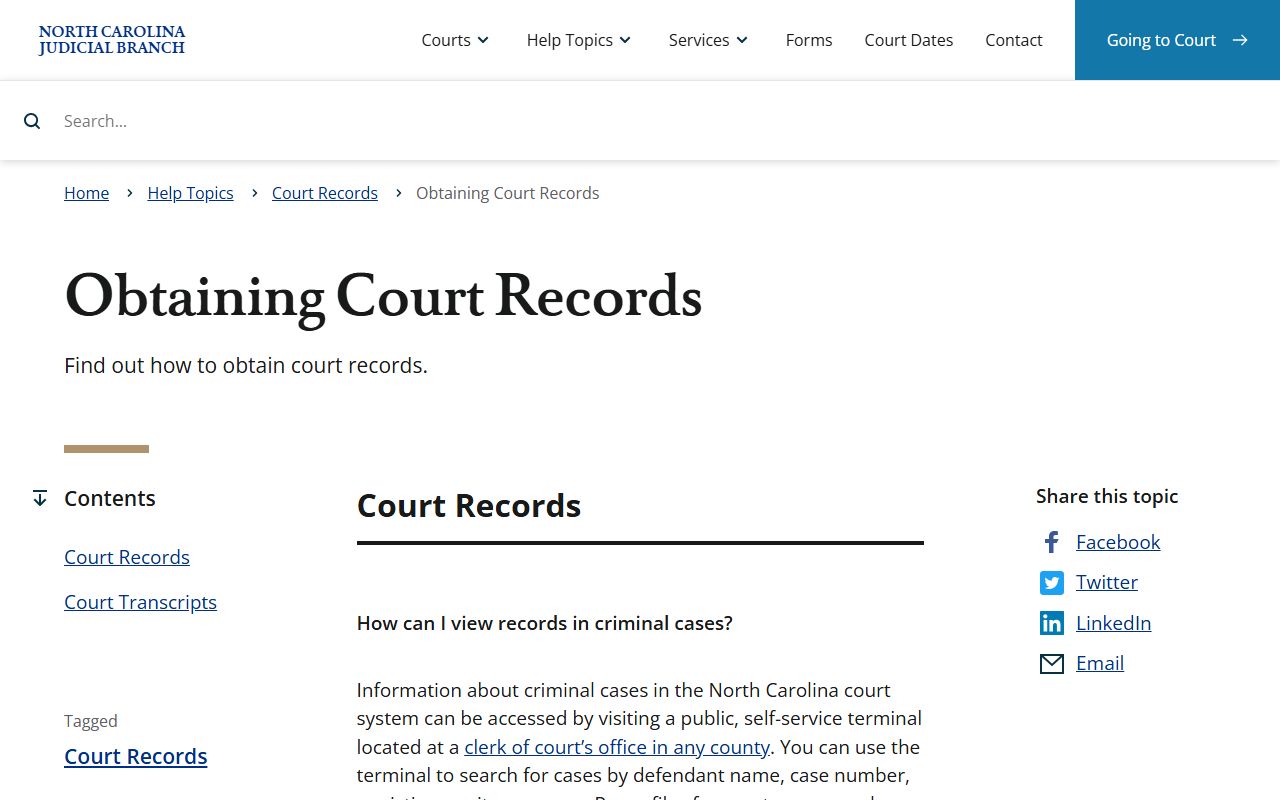
The help topic is useful because it separates Portal case information from full file review, copy requests, transcript requests, divorce judgments, and criminal background checks through the clerk.
What Graham County Court Records Show
Portal did not allow a full live case click-through in the research capture without JavaScript and CAPTCHA, so online results should be treated as case information rather than a promise of every document. The sample inventory below uses Portal controls and the Judicial Branch public access description. For legal use, match online results to the clerk's file.
| Field | What It Shows |
|---|---|
| Case number / record number | The court identifier. Traffic cases may use CR for criminal offenses and IF for infraction-only matters. |
| Party names | Defendant, plaintiff, petitioner, respondent, decedent, personal representative, or other party names, depending on case type. |
| Case type and status | The category and current posture, such as criminal, civil, estate, domestic, pending, disposed, or closed. |
| Filing date | The file date and date range used to narrow Portal results. |
| Docket entries | Chronological entries such as complaint, citation, warrant, motion, order, hearing, continuance, plea, judgment, dismissal, appeal, or payment event. |
| Hearings | Dates tied to party name, case number, attorney, judicial officer, courtroom, and hearing type. |
| Financial fields | Costs, fines, restitution, bond, payment status, failure to pay, or collection information where shown. |
| Redactions | Restricted information such as Social Security numbers, financial account data, juvenile details, and sealed material. |
Graham County Court Records Access Rules
North Carolina law supports public access to many court records, but court files are not handled the same way as ordinary county department records. N.C.G.S. 132-1 defines public records broadly for North Carolina government agencies. N.C.G.S. 7A-109 requires clerks to maintain records, dockets, files, and indexes and states that clerk records are generally open for inspection during regular office hours unless a law says otherwise.
Court records should be requested through the Judicial Branch, Portal, public terminals, or the Graham County Clerk of Superior Court. The Judicial Branch public-record request page routes court case information, divorce judgments, vital records, police reports, real estate records, and county or city documents to different offices. Graham County's county-manager public records policy uses written requests and says phone requests are not accepted for that county process, but that policy is not the main path for court case files.
The Judicial Branch public-record request page helps separate court case records from county, police, vital, and real estate records.
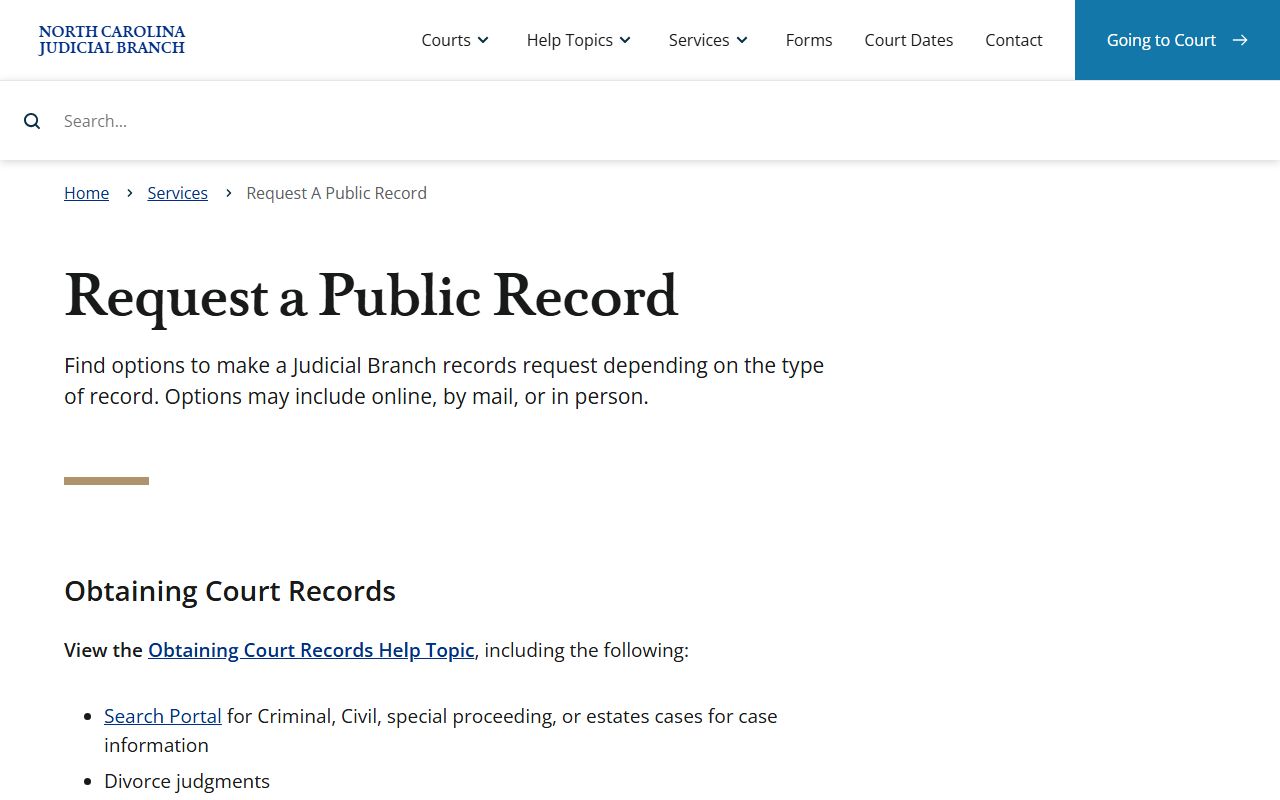
That distinction matters in Graham County because the clerk, sheriff, register of deeds, and county manager do not all hold the same types of public records.
Note: Public access to clerk records does not make sealed, expunged, juvenile, adoption, or mental health files open to ordinary search.
Restricted Graham County Court Records
Some Graham County court records are restricted by statute, court order, or case type. Juvenile files are not open like adult criminal or civil files. Adoption files and many mental health or involuntary commitment records are confidential. Records can also be sealed by court order or cleared from public record through expunction. A missing case in Portal does not always mean no case ever existed.
Criminal investigation records are a separate limit. N.C.G.S. 132-1.4 says law enforcement criminal investigation and intelligence records are not public records under the public records law. Basic court charging documents may become court records after filing, but police investigative files, witness notes, and active investigative material are not the same thing as clerk case files.
The clerk record statute in Article 12 of Chapter 7A is one of the main public-access anchors for Graham County court records.
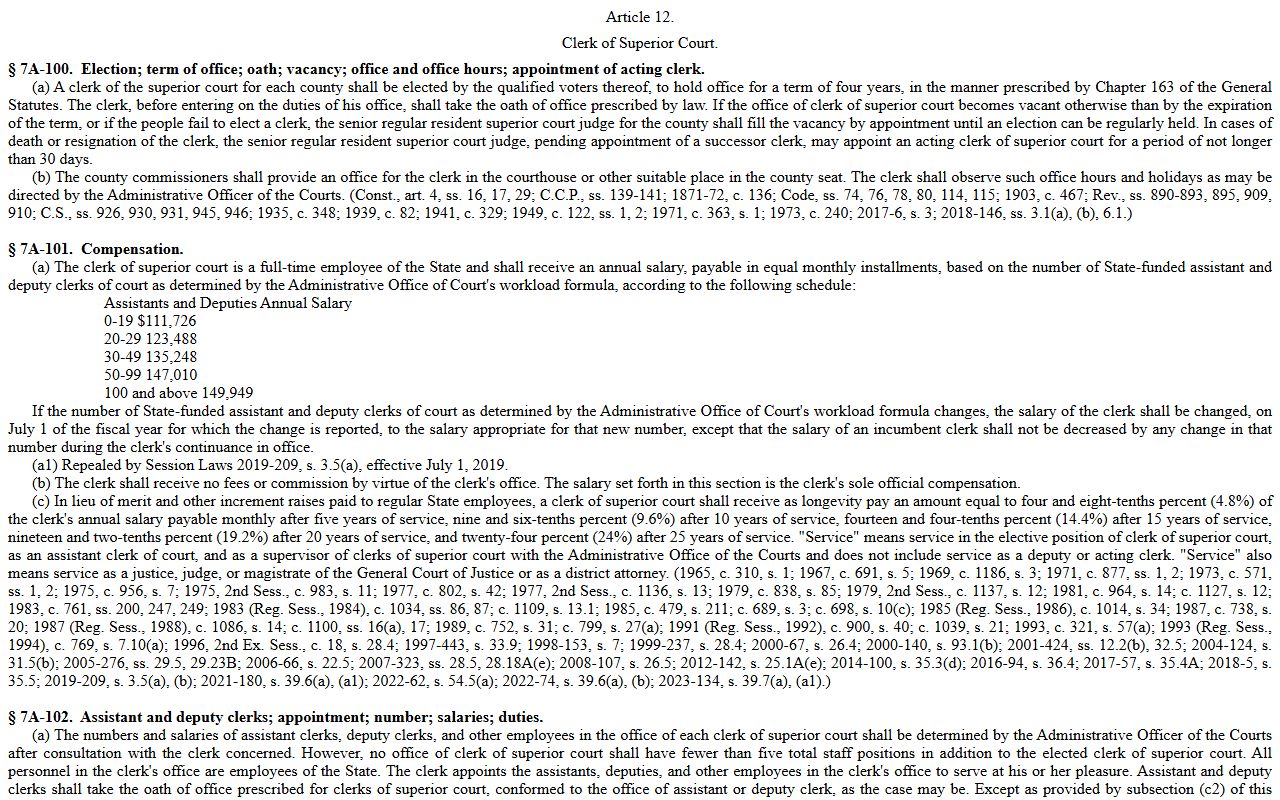
The statute also explains why the clerk's office remains important even when Portal provides the first online search path.
Graham County Court Records at the Clerk
The in-person path is the Graham County Clerk of Superior Court. Public terminals in clerk offices can be used for criminal, civil, special proceeding, and estates case information. Criminal records can be searched at public terminals by defendant name, case number, or victim and witness name. Paper files are viewed through the clerk in the county where the case is located, and copies are available for a fee.
For Graham County case-specific help, call or visit the clerk's office. Staff can route records, copy, payment, and filing questions, but they cannot give legal advice. Mail payments and some copy-related correspondence use the clerk's mailing address. The Graham County payment page says mail payments must be money order or certified check payable to Graham County Clerk of Superior Court, with no cash or personal checks by mail.
Graham County Clerk of Superior Court
12 North Main St. / 12 Court St.
Robbinsville, NC 28771
(828) 479-7000
Monday-Friday, 8:00 AM-5:00 PM
The Portal home is the gateway to Smart Search, Search Hearings, payments, and judgment search for Graham County court records.
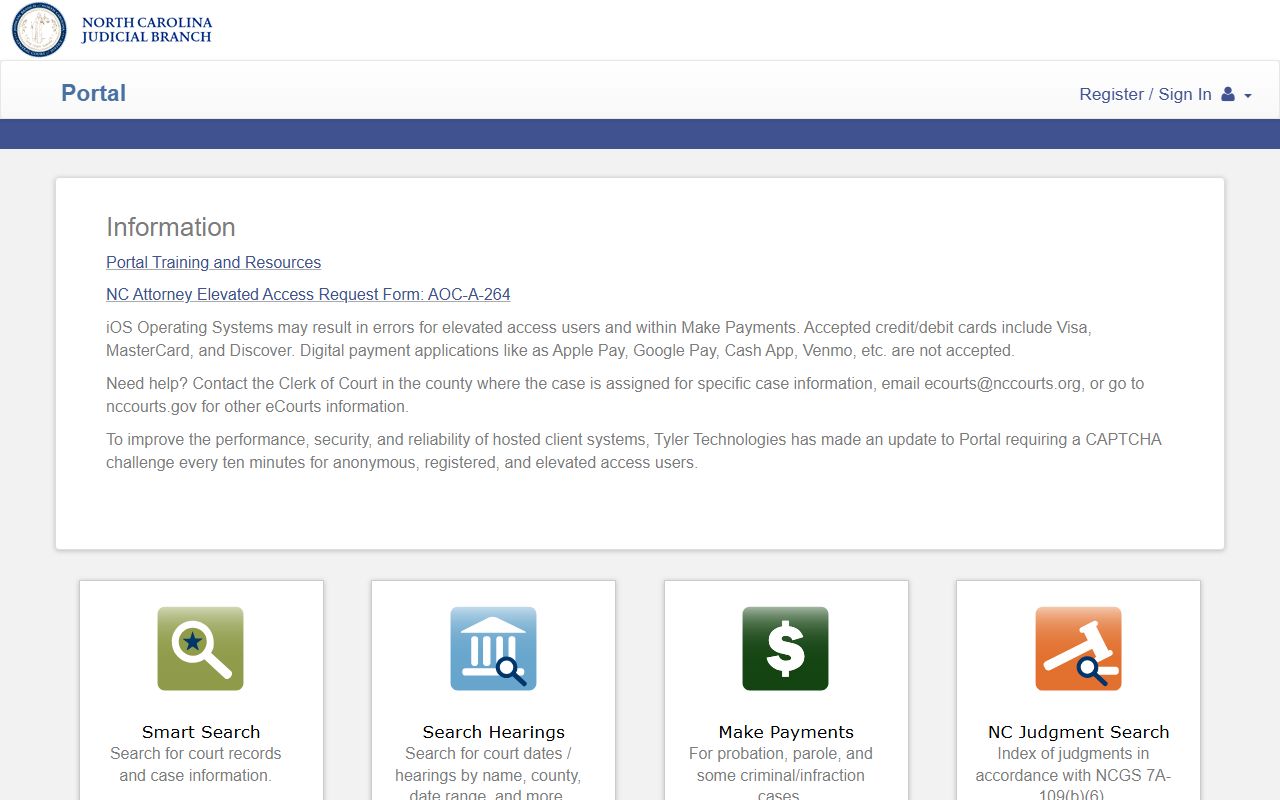
Use Portal first for a quick case lookup, then use the clerk when the task requires a certified copy, a full file review, or a record that is not visible online.