
Graham County Criminal Court Records
A criminal court record is the court file, not just the arrest entry. In Graham County, the Clerk of Superior Court keeps criminal case records for the state courts that sit in the county. The file can begin with a citation, warrant, complaint, information, or indictment, then grow as hearings, motions, pleas, orders, dispositions, and sentencing entries are added.
District Court hears misdemeanors and infractions without jury trial. Superior Court hears felony criminal cases and appeals from District Court for a new trial. Magistrates matter early in the process because they can issue warrants for arrest, set bail, and accept some minor waivers. The District Attorney for Prosecutorial District 43 prosecutes cases in the district, while the Defender District 43 public defender represents eligible appointed defendants.
For a closer look at the charge itself after an arrest, use the Graham County arrest records and court charges page. The full case history, disposition, and sentence stay in the criminal court record.
Search Graham County Criminal Cases
Criminal case lookup starts with the North Carolina eCourts Portal. Smart Search can search by record number or party name, and advanced filters can narrow by Graham County, case type, status, and filing dates. Search Hearings can locate court dates by case number, party name, attorney, judicial officer, or courtroom. The Portal may require JavaScript, cookies, and CAPTCHA, and it should not be treated as a complete criminal history database.
- Open Smart Search and enter the criminal case number if known.
- For a name search, use last, first middle suffix format or the advanced last-name and first-name fields.
- Select Graham County in the location filter to limit results to local cases.
- Review the docket entries for charges, hearings, pleas, dispositions, and sentence-related events.
- Use Search Hearings when the next court date or courtroom is the main question.
- Request copies or a public terminal search through the Graham County Clerk of Superior Court when the online entry is not enough.
NC Judicial Branch guidance says criminal records can be searched at public self-service terminals in any clerk's office by defendant name, case number, or victim and witness name. Paper files are viewed at the clerk's office in the county where the case is located.
Graham County Criminal Case Flow
A Graham County criminal court record changes as the case moves. A charge can be filed after an arrest or citation, then the file may show the initial court appearance, bond conditions, pretrial hearings, motions, plea discussions, trial, disposition, and sentence. Not every case reaches every stage. A charge can be dismissed, reduced, amended, or resolved by plea before trial.
Case flow: Charges Filed › Arraignment › Pretrial / Motions › Plea or Trial › Disposition › Sentencing
| Stage | What Happens |
|---|---|
| Charges filed | A citation, warrant, complaint, information, or indictment places the offense in court records. |
| Arraignment | The court addresses the charge and plea, such as guilty, not guilty, or another allowed response. |
| Pretrial / motions | The docket may show bond issues, continuances, motions, notices, discovery-related events, or calendar settings. |
| Plea or trial | The case is resolved by plea, trial verdict, dismissal, or another disposition. |
| Sentencing | After conviction, the record may show sentence, probation, fines, costs, restitution, or custody terms. |
Graham County Criminal Record Fields
The criminal court record field inventory below reflects Graham County and North Carolina court-record research. Portal results may show only some fields, while the clerk's file can hold the full case file when public access is allowed.
| Field | What It Shows |
|---|---|
| Case number | The court identifier. CR often marks criminal cases, while IF can mark infraction-only traffic matters. |
| Defendant | The person charged in the criminal case. |
| Charges | The offense names, statutory language, severity level, and amendments where shown. |
| Bond / release | Conditions set through magistrate or court processes when reflected in the file. |
| Hearings | Arraignment, pretrial, trial, plea, sentencing, probation, or review settings. |
| Plea | The defendant's answer to the charge, such as guilty or not guilty. |
| Disposition | The outcome for each charge, including guilty, not guilty, dismissed, or other court result. |
| Sentence | Punishment or conditions after conviction, such as probation, confinement, fines, costs, or restitution. |
Charges vs Convictions
A charge is an accusation filed in court. A conviction is a finding or plea that results in guilt. Graham County criminal court records can show charges that were later dismissed, reduced, amended, or resolved without a conviction. That is why each count or charge line should be read with its disposition, not only its original label.
| Point | Charge | Conviction |
|---|---|---|
| Meaning | An alleged offense filed by citation, warrant, complaint, information, or indictment. | A guilty plea, guilty verdict, or other finding of criminal guilt. |
| Timing | Appears early in the case. | Appears after plea, trial, or other final outcome. |
| Record reading | Must be paired with status and disposition. | Must be paired with sentence, probation, costs, and appeal status. |
| Risk of misread | A dismissed charge can look serious if read alone. | A conviction can have court, license, custody, or collateral effects. |
Graham County Criminal Access Limits
Many adult criminal court records are public, but several limits apply. N.C.G.S. 132-1.4 excludes law enforcement criminal investigation and intelligence records from the general public records definition. That means a police investigative file is not the same as a filed criminal court case. Court charges may be public after filing, while investigative notes, witness work, and active law enforcement material can remain restricted.
Juvenile court records are restricted under N.C.G.S. 7B-3000. Sealed cases, expunged entries, adoption records, mental health matters, personal identifiers, protected addresses, and financial account details are also withheld or redacted. For broad record access, North Carolina uses the clerk rules in Chapter 7A Article 12, which makes clerk records open unless a law prohibits access.
The official expunction help topic explains how North Carolina treats criminal court records that may be cleared from public view.
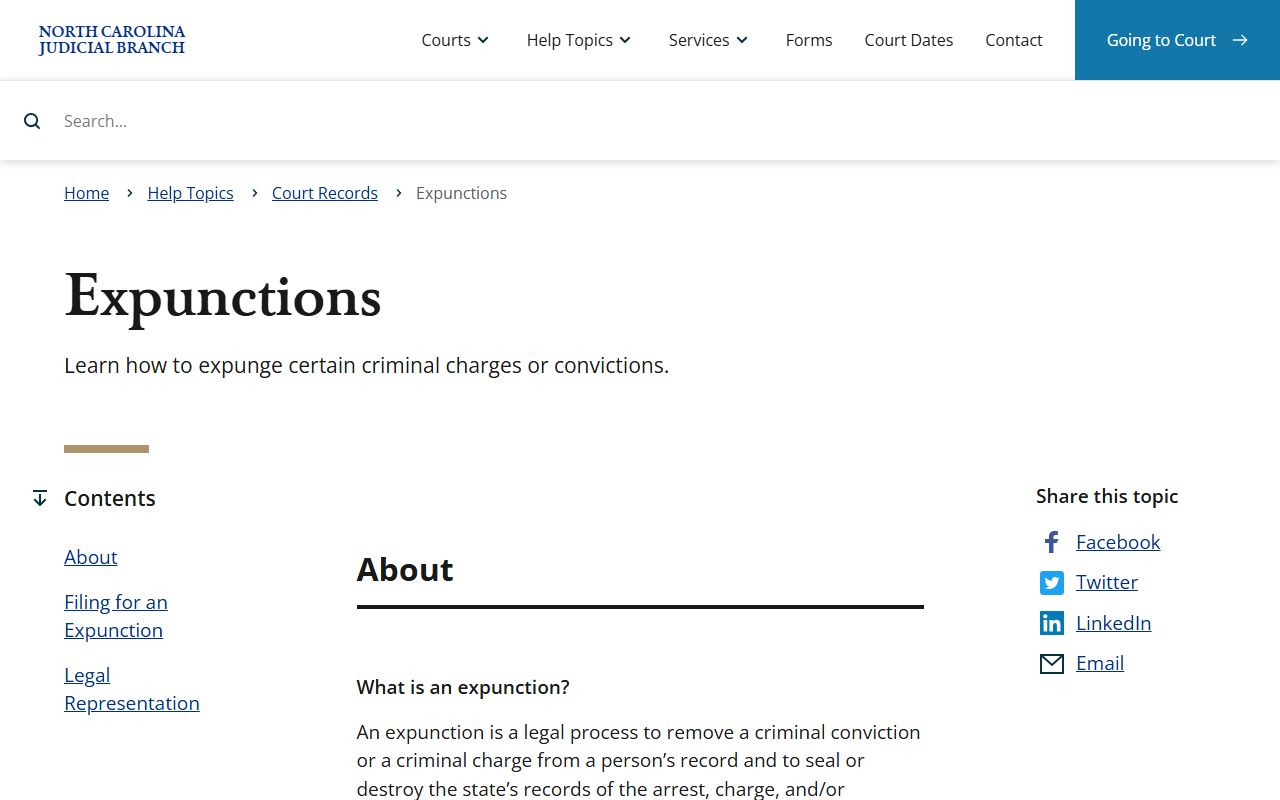
Expunction is case-specific, so a Portal search should not be used as proof that no record was ever filed.
Sealed vs Expunged Records
Sealing and expunction both limit public access, but they are not the same. A sealed record is hidden from ordinary public access by law or court order. An expunction is a legal process that clears qualifying public record entries after an order is granted. North Carolina statutes use expunction rules for certain dismissed charges, not-guilty findings, and some nonviolent convictions when the person meets the statutory conditions.
| Point | Sealed | Expunged |
|---|---|---|
| Public view | Hidden from ordinary public access. | Public record entries are cleared after the order is processed. |
| Source | Law or court order. | Statutory expunction process and court order. |
| Examples | Juvenile, mental health, or sensitive protected material. | Some dismissed charges, not-guilty findings, or eligible nonviolent convictions. |
| Research check | Ask the clerk about access authority. | Use Judicial Branch expunction forms and current court costs. |
The effect of expunction is addressed in N.C.G.S. 15A-153.
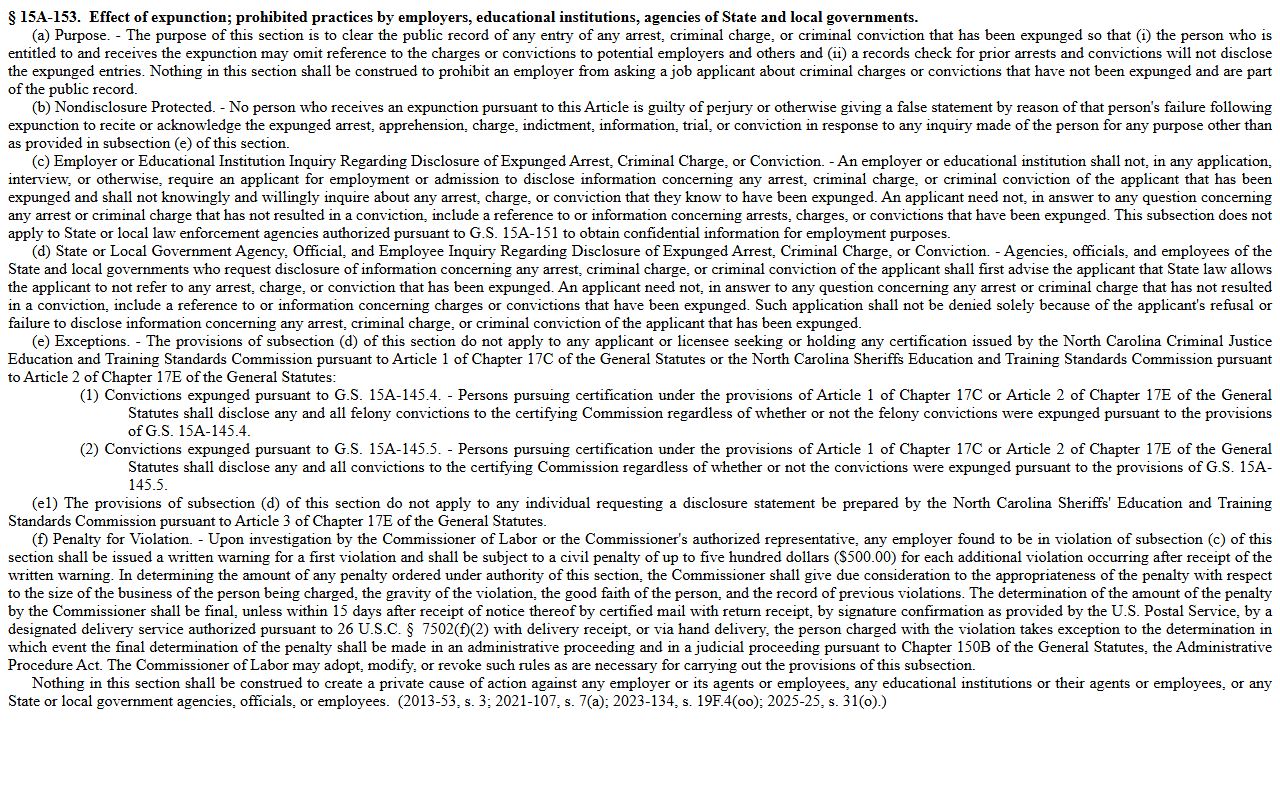
The statute is important because it explains why some records no longer appear in public court searches after an expunction order.
Reading Graham County Dispositions
A disposition is the outcome of a charge or case. Common outcomes include guilty, not guilty, dismissed, or other court results that depend on the case type. A sentence is the punishment or terms imposed after conviction, such as probation, confinement, fines, costs, restitution, or other conditions. A case can include more than one charge, and each charge can have its own status.
Statewide systems can help with post-sentencing questions, but they are not substitutes for the court file. The NC Department of Adult Correction offender search covers state prison offenders, probationers, parolees, and historical data back to 1972. The NCSBI sex offender registry is a separate registry, not a Graham County criminal court docket.
The NC DAC offender search is relevant after conviction or supervision, not for every Graham County criminal court record.
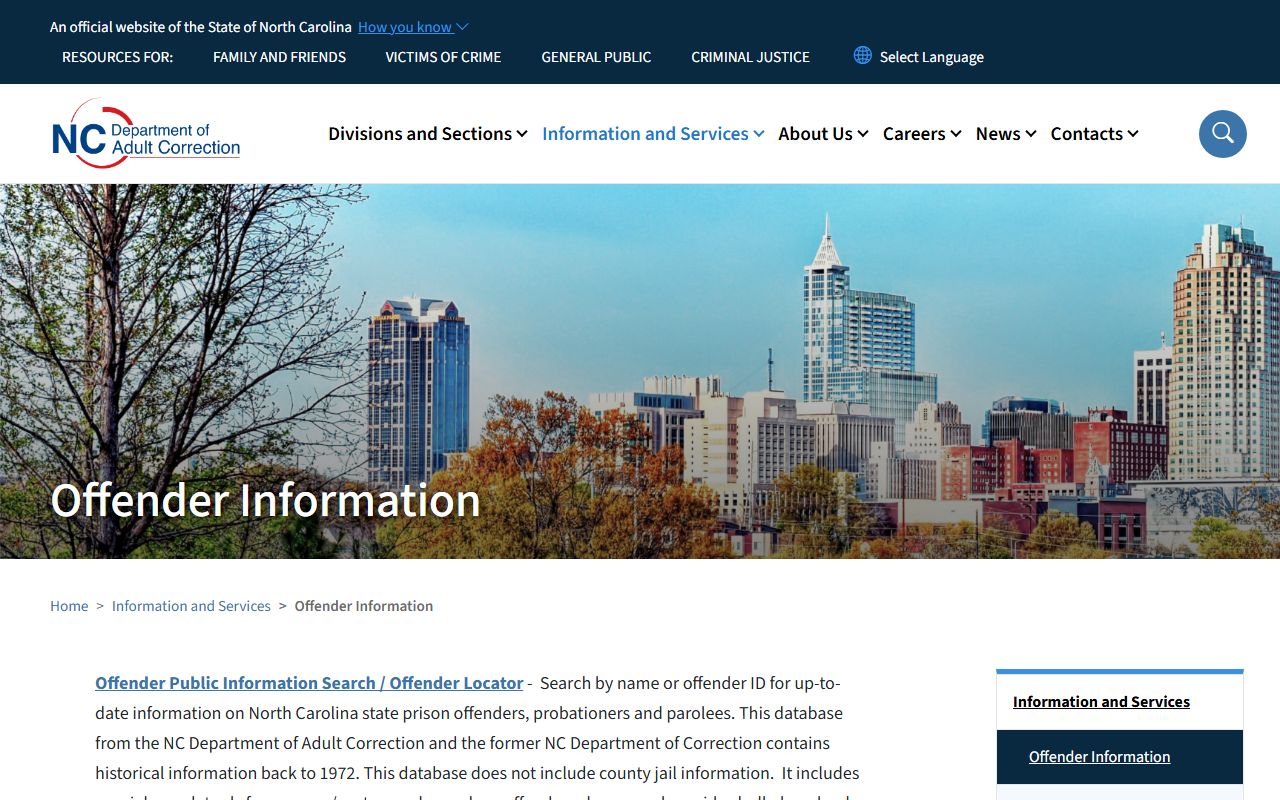
Use DAC for state custody or supervision status and the clerk for the court judgment and sentence.
The NCSBI registry is a separate public safety database tied to sex offender registration laws.
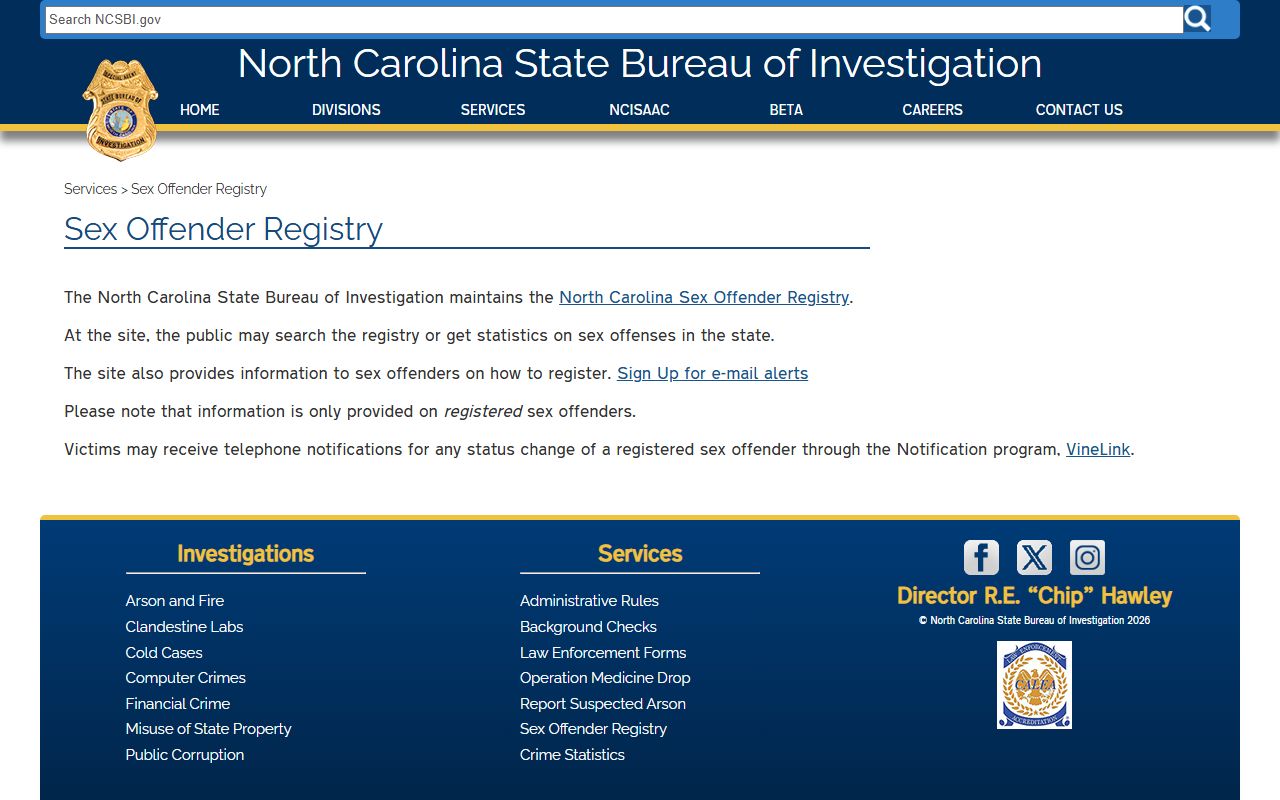
Registry listings should not be treated as a complete list of Graham County criminal cases.
Graham County Criminal Copies
The Clerk of Superior Court is the local source for full file review, criminal background checks through court records, paper files, and certified copies. The Graham County court contact directory lists local court routing, and the clerk phone is (828) 479-7000. Mail payments to the clerk must use money order or certified check when payment is accepted by mail, and personal checks are not accepted under the Graham County payment instructions.
Use the Graham County Judicial Branch page for court dates, calendars, local rules, payment links, and county court services. For criminal case records, the access chain is Portal, public terminal, in-person clerk file review, clerk phone routing, and mail when a payment or copy request is allowed.
For defense routing, Defender District 43 lists Chief Public Defender Janna D. Allison with a Waynesville office phone of (828) 454-6514. For prosecution identity, the North Carolina Conference of District Attorneys lists Prosecutorial District 43 with District Attorney Ashley Hornsby Welch. The District Attorney can file, reduce, dismiss, or negotiate charges, but the clerk maintains the filed criminal court record.
North Carolina expunction eligibility for certain nonviolent misdemeanors and felonies is addressed in N.C.G.S. 15A-145.5.
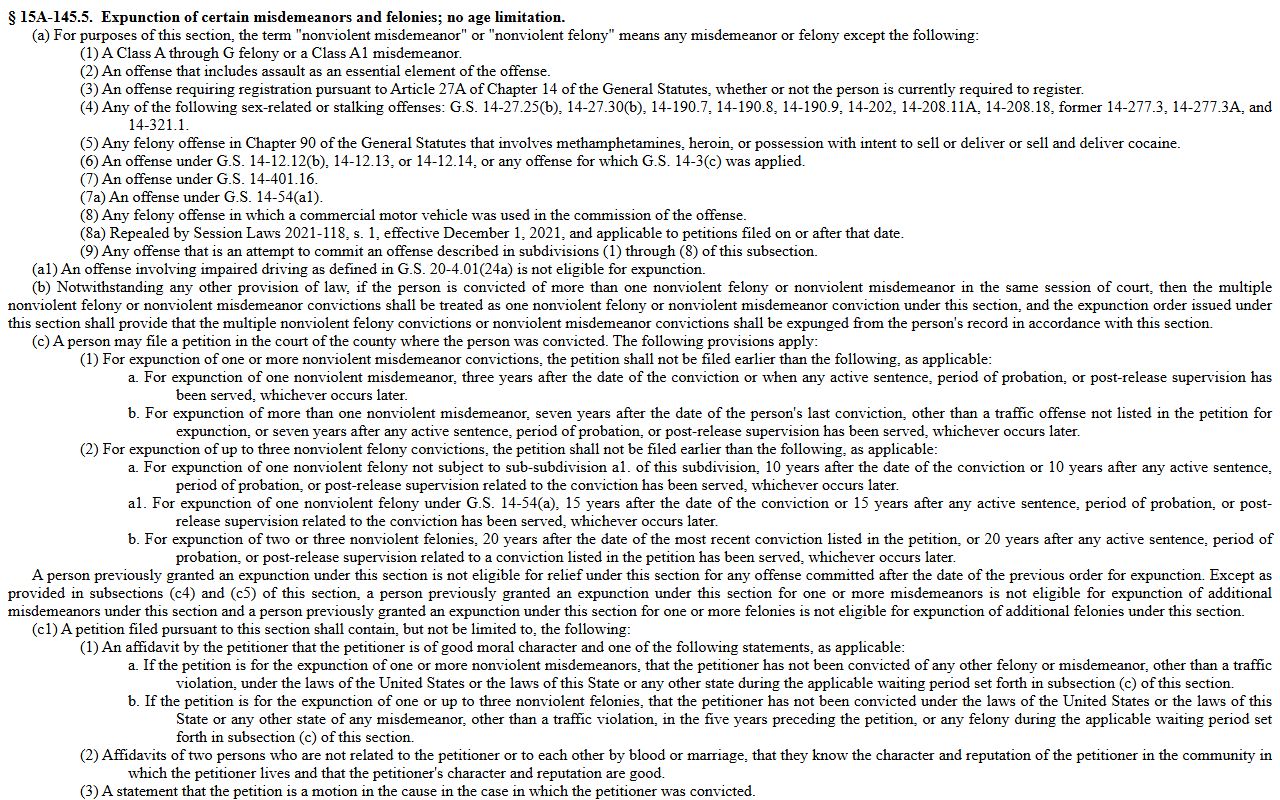
Eligibility depends on the charge, outcome, waiting period, prior record, and the specific statute that applies.
Important: Criminal case lookup is not an FCRA consumer report and should not be used for regulated screening decisions.